Showing posts with label Digital Citizenship. Show all posts

Saturday, April 22, 2017

My digital Classroom : Blended Teaching

                                              My digital Classroom : Blended Teaching


Blending traditional and digital teaching requires careful planning. Lesson plans should include a variety of methods of teaching to engage students in learning. Then, As a prospective teacher, a series of questions should be asked while planning for blended teaching. When a math teacher should choose the right pedagogy of teaching a combination of traditional and online teaching ? How will I use blended teaching? What tool will I use to enforce my blended teaching?

In my digital classroom, blended teaching will allow me to better my relationship with my students. It is an opportunity to give my students ownership of their learning by changing the space, the time and the tools of their learning. At times, my students will learn partly online, afterward, they will discuss what they have learned in class. The teacher will have a chance to interact with his students as well as learners will collaborate with their peers in their group discussion sessions. In her video, Stacy Hawthorn mentioned the four models of blended learning: Rotating students model; we applied this model in this class when we formed with seats and tables a circular shape to encourage an engaged conversation in the classroom. The author of the video talked about flex models, self blended model and enriched virtual model. The models variety shows that blended learning could be implemented in various ways that will keep students engaged in their learning. 

In this class, the no face to face classes at various stages of my learning in this class of instructional technology applications is a testimony of blended room. I had the opportunity to read independently various articles and watch the videos that the teacher had selected for the corresponding learning target. Following the no face to face class, student met with the teacher to shed the light on what had been learned on learning management system Springboard. We had a lively discussions and reflections on the subject and more projection on the future reading. I believe blended learning in this class allowed me to ponder on my learning as well as advance learning at an acceptable pace.  

Our blended learning approach has been slightly ineffective in this class being not able to apply various models of blended learning due to the constraint of time. One semester is not enough to apply various ways of blended learning while in middle and high school schools teachers have ample of times to apply other models that were mentioned in the video. In addition, Students support to the blended learning model was limited with respect to a lively discussion on line by writing constructive comments on peers blogs. Therefore, students role in building the learning environment is important. However. I found some sporadic comments on certain blogs interesting to read. During blended learning in this class, small network communication channels were created that could be noticed in comments posted online. It was interesting to see how students choose to respond to some blogs but not to others and whether the decision making was based on the personal interests, cultural background or gender. 


As a prospective math teacher, I will use blended teaching when I see students need to work at their own pace. Math teacher who has to teach his kids how to solve one variable equation, need to investigate the students' previous knowledge. Some students still struggle with adding, subtracting, multiplying and dividing  like and opposite signed numbers. At this instance, the math teacher will personalize the teaching according to the students' learning need. Blended teaching will allow the teacher to differentiate his teaching until all students acquired the prerequisite knowledge to learn the concept of solving an equation with one variable.


Blended Learning Energizes High School Math Students (Tech2Learn Series

The above differentiated learning using blended learning will leads me to the most striking thing I took away from Stacy's Presentation. The teacher role in the defining dimensions of learning model and where I stand as a teacher, my role to lead and support the instruction and when I should let my students direct their own learning. The questions she raised are important while planning for blended teaching. The blended learning that is considered an instructional model will be designed at the unit or at curriculum level. Finally, the ability to tune in the parameters in the blended learning will allow the teacher to use blended teaching effectively.
1

1.    

Monday, April 17, 2017

Digital Classroom: Gamification of Probability with Dice


                                                  Gamification of Statistics

Learning statistics through games help students engage with the content and solve math problems. Students who struggles with a bunch of axioms thrown at them to learn statistics need motivation through e-learning. Conditional probability is better introduced to students through games rather than applying a given formula. We will explore briefly the meaning of conditional probability, then we’ll investigate how Bayes rule is implemented in games.

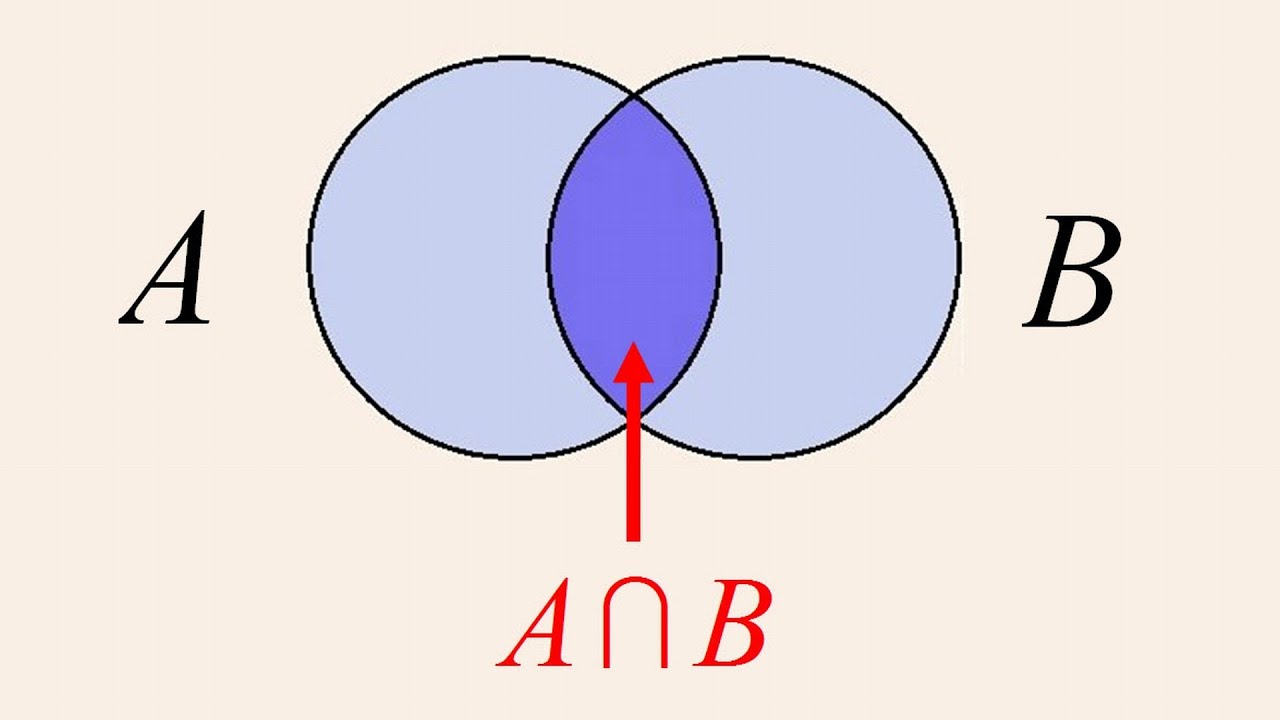
Conditional probability states that during an experiment, there are specific condition in order for event A given that event B has occurred. A simple example is rolling a balanced dice twice where event A is the sum of the numbers is 7. Event B is both numbers are odd. The probability of A given B denoted P(A / B) = P(A n B) / P(B)
It is easier to understand this concept by illustrating a Venn Diagram.


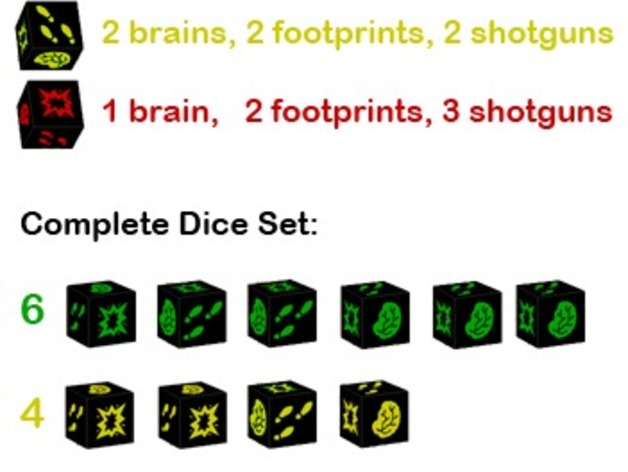
Let’s see how the concept of conditional probability is used in a games such as Zombie Die. The player has 13 dice in a cylindrical container. He got to select and roll only 3 balanced dice. Note that the faces of each die contains either a Brain, Shot Gun blast or Runners. The colors of dice are distributed as follows:
6 green dice : { 3B, 1SG, 2R}
4yellow dice: { 2B, 2SG, 2R}
3red: {1B, 3SG, 2R}


The students will be asked the following question: What is the probability of getting a brain face given a red die?
P(R/B) = P(R n B) / P(B)
P(B/R) = [P(R/B) x P(R)] / P(B)
Students need to find the probability of having Brain face, the probability of having Red color, the probability of having Red color given a Brain face . Finally, they will be able  to solve the  probability of having a brain face given a red die. 
The teacher’s question is only one form to understand the conditional probability. Students can create their own questions to expand their knowledge of the learning target. The advantage of using this game is that students can work as a group of three or four students that will stimulate instructive communication. Dice games allow students to come up with variety of responses while playing a game while learning.


Friday, March 10, 2017

Digital Citizenship


My Digital citizenship is about my responsibility as a citizen in a virtual world using various information technology tools. The norm of behaviors that I exhibit toward my fellows E-citizens in a digital society define my framework of digital citizenship. My digital participatory in a numerical society is based on a personal conviction of good behavior founded on mutual respect, and promoting safer digital environment for learning to everyone.

My digital access has become much easier and cheaper. I use internet constantly to stay abreast with my academics and my family overseas. Public libraries offer free limited hours for its patriots to use internet. One can find free Wi-Fi hot spots around town. Even though competition is tense among communication companies to attract more clients, I find my 5 GB for a reasonable price is not enough for me to stay connected to the digital world. I find myself obliged not to use high stream data applications such as you tube. As I travel overseas, the environment and location become a factor to stay a digital citizen. I had to purchase a new cell phone that conform to the regulation of the host country, visit cyber cafes more often and get use to the French system keyboards to stay connected to the digital world. In spite of the mentioned obstacles, In spite of the mentioned obstacles, I still consider myself having digital access to be a digital citizen      

A part from my experience on internet access, the article Teaching Digital Citizenship in the elementary classroom talked about digital access as the first of the nine elements of digital citizenship. The author stated that the opportunity should be granted to everyone to have access to internet. The article mentioned on digital access that Digital Citizenship is fundamental in development of society.    

My perspective of digital citizenship is based on respecting other digital citizens. My comments online are usually brief and to the point. I treat online users with mutual respect that promote progress in digital communication. As I further my education and widen my professional learning network, I become more participant in the digital world. Being aware of the visited online sites and their heir audience does affect the digital citizen. My feeling do not get hurt when reading aggressive comments by taking several precautions. Firstly, as a responsible digital citizen, I never respond to a harsh comment by the same. Avoiding digital communication conflict help the parties to not engrave the situation. As Dale Carnegie says in his book on how to influence people in one of his principals: “Show respect for other person's opinion. Never say you're wrong”. I believe it is a golden advice from one of the expert on how to deal with people. Even though his principals were meant to be used for communication in the real world, I think as a digital citizen, we should treat our digital audience as we meet them face to face. In addition,      


I like to read people’s reactions on issues that contribute to personal and professional growth. People react to issues in various ways in a digital society. As an adult who uses the information technology, I respect others opinions in the digital world. Even though
Sometimes, the expressed views are not in line with my opinion, I view it as an opportunity to exercise rational. As a responsible adult digital citizen, in the same article mentioned above Teaching Digital Citizenship in the elementary classroom, the author framed three of the nine elements of digital technology under Respect, Educate and Protect or REPs. These elements are digital access, digital etiquette and digital laws. Even though we have full access to internet and we laid out ground rules or laws for numerical world, we still have to treat others with respect to protect ourselves.

Having considered respecting digital citizens can only enhance the digital environment, it is also reasonable to look at confronting the fear of lurking dangers that could prevent digital citizens from being part of digital participatory culture. Mr. Garth Holman, in his video Fostering Digital Citizenship and Student Legacy shows how a person can leave his or her digital footprint accessible to other parties. The web, twitter, student record,..etc. All have been archived. This wealth of information as digital archive that is shared with others about people's activities online could raise concern on the danger of lurkers. Parents and teachers should make kids aware of what is on the web, how to use internet and how to leave positive digital footprint. Mr. Holman gave several examples on how his students use what they learn in class about being a digital citizen and how they apply it in their real life. For example, students search information about their parent digital footprint. A student shares what is on class with the other digital citizens. The parents and teachers should contradict the fear and concerns on what might represent lurker dangers by educating students to build a good digital footprint or a legacy that is positive for other people to see.